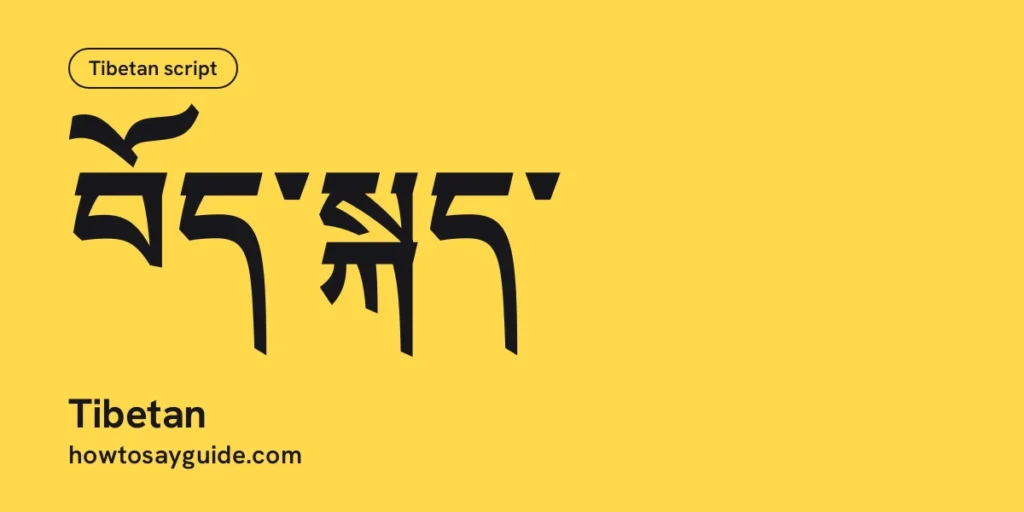
How to Say “Girl” in Tibetan
The Tibetan word for girl is བུ་མོ. བུ་མོ is a noun used to refer to a young female person.
Tibetan is spoken on the Tibetan Plateau in western China and by Tibetan communities in India, Nepal and Bhutan. Standard Tibetan, based on the speech of Lhasa, had about 1.2 million speakers in a 1990 count, and there are many other Tibetan varieties. It is an official language of the Tibet Autonomous Region together with Chinese.
Tibetan has its own script, written from left to right, which dates from the 7th century and has changed little since, so spelling is far from pronunciation. Lhasa Tibetan is tonal. Tibetan also has a respectful vocabulary, with separate honorific words for many everyday things, used when speaking to or about elders and lamas.
| Family | Sino-Tibetan, Tibetic |
|---|---|
| Speakers | about 1.2 million, Standard Tibetan (1990) |
| Where spoken | China (Tibet), India, Nepal, Bhutan |
| Script | Tibetan script |
| Codes | bo (ISO 639-1), bod (ISO 639-3) |
Speaker number: Ethnologue, 18th edition, citing 1990, via Wikidata. Retrieved 26 September 2026.
The Tibetan word for girl is བུ་མོ. བུ་མོ is a noun used to refer to a young female person.
The Tibetan word for aunt is སྲུ་མོ (sru mo). The term refers to a parent’s sister or a sister-in-law.
The English phrase ‘love’ is translated into Tibetan as བརྩེ་བ།.
The Tibetan word for grandma is རྨོ་ལགས (rmo lags). This term is used to refer to a grandmother in an informal context.
Learning how to say goodbye in different languages opens up a world of cultural understanding and connection. If you’re interested
How to Say Goodbye in Tibetan: A Comprehensive Guide Read Post »
The Tibetan verb for ‘sit’ is སྡོད. This verb is used to describe a person being in a position where the upper body is upright and the legs are supported.
To say good morning in Tibetan when you see someone for the first time in the morning, say སྔ་དྲོ་བདེ་ལེགས། (nga dro de lek).
To say “happy birthday” in Tibetan, use སྐྱེས་སྐར་ལ་བཀྲ་ཤིས་བདེ་ལེགས་ཞུ།.