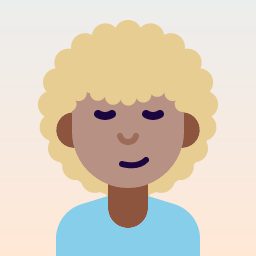
어쩔 수 없지
eojjeol su eopji
The English phrase "oh well" can be expressed in Korean as 어쩔 수 없지 (eojjeol su eopji).
어쩔 수 없지 is used to express mild disappointment or resignation when a situation is beyond one's control. It translates to "it can't be helped" or "it is what it is," and is appropriate when you have accepted an outcome after a minor setback.
Meaning: ''expression of mild disappointment or resignation'' (intj)
What does it mean word for word?
The phrase is a contraction of 어찌할 수 없다, which literally means "there is no way to do [something]" or "it is impossible to act."
Which one should you use?
While 괜찮아 means "it's okay" and focuses on reassurance, 어쩔 수 없지 focuses on the inevitability of the situation.
How does it change in a sentence?
The ending -지 (-ji) makes the phrase sound like a casual confirmation of a resigned fact or a way of muttering to oneself. In a polite setting or when speaking to someone older, you should use the polite form 어쩔 수 없어요 by adding the polite ending -요 (-yo).
How do you pronounce it?
eojjeol su eopji
Did you know?
- In the phrase 어쩔 수 없지, the word 수 actually functions as a noun meaning 'way' or 'method' derived from the Sino-Korean word for 'hand', 手.
- In Korean culture, saying 어쩔 수 없지 can be a way of subtly avoiding blame by framing a failure as an inevitable result of external circumstances.
- While 어쩔 수 없지 expresses resignation, Koreans often pair this sentiment with a deep sigh to signal that they have fully accepted a fate they cannot change.
Examples in context
- 내가 늦었어요. 어쩔 수 없군요.I'm late. Oh well, it can't be helped.
- 어쩔 수 없지.eo-jeol su eop-ji.Oh well, it can't be helped.
- 이미 벌어진 일이니 어쩔 수 없지.i-mi beol-eo-jin il-i-ni eo-jeol su eop-ji.It already happened, so oh well.
- 계획이 바뀌었지만 어쩔 수 없지.gye-hoek-i ba-kkwi-eot-ji-man eo-jeol su eop-ji.The plans changed, but oh well.
Example conversation
Minjun and Jieun are discussing a canceled outdoor appointment due to rain.
- 민준 Min-jun비가 와서 못 나가겠네.bi-ga wa-seo mot na-ga-get-ne.It's raining, so we can't go out.
- 지은 Ji-eun어쩔 수 없지, 다음에 가자.eo-jeol su eop-ji, da-eum-e ga-ja.Oh well, let's go next time.
- 민준 Min-jun그래, 집에서 쉬어야겠다.geu-rae, jip-e-seo swi-eo-ya-get-da.Okay, I should just rest at home.
- 지은 Ji-eun응, 민준 씨도 푹 쉬어.eung, Min-jun ssi-do puk swi-eo.Yeah, you rest well too, Minjun.
Sources
- Word origins: Wiktionary entries 수, CC BY-SA 4.0.