How to Say “Mary” in Japanese
The English name Mary is translated into Japanese as メアリー.
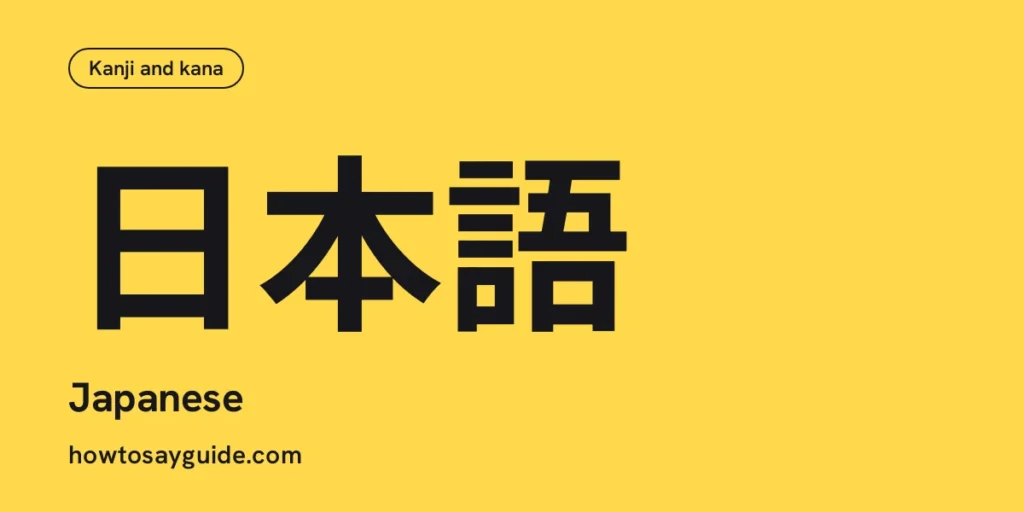
Japanese is the language of Japan, spoken as a first language by about 128 million people. It is the national language in practice, although no Japanese law names it as official. Its closest relatives are the Ryukyuan languages of Okinawa, and it has no proven link to Chinese or Korean, even though it borrowed much of its writing and vocabulary from Chinese.
Japanese is written with three scripts used together: kanji (characters taken from Chinese), hiragana and katakana. Spellings in Latin letters, like the ones used in these guides, are called romaji. Politeness is built into the verb. The polite forms ending in -masu and desu are the safe choice with strangers, shop staff and older people, while plain forms are kept for friends. Add -san after another person's family name instead of Mr or Ms, but never after your own. Vowels are short and clear, with a as in "father", and a doubled vowel or consonant in romaji is held twice as long.
| Family | Japonic |
|---|---|
| Native speakers | about 128 million (2019) |
| Official in | Japan (national language in practice) |
| Script | kanji, hiragana and katakana |
| Codes | ja (ISO 639-1), jpn (ISO 639-3) |
Speaker number: Ethnologue (2019), via Wikidata. Retrieved 26 September 2026.
The English word ‘icy’ is translated into Japanese as 凍った. 凍った is used to describe something that is extremely cold, frigid.
The English phrase checkmate is expressed in Japanese as チェックメイト or 詰み. Both terms refer to the moment a game of chess is concluded with a decisive move.
The English phrase ‘baby seal’ is translated into Japanese as アザラシの赤ちゃん. アザラシの赤ちゃん is used to refer specifically to a young seal.
The English word “casein” is translated into Japanese as カゼイン. カゼイン is a noun used to refer to the protein found in milk.
The English word ‘truth’ is translated into Japanese. The default form is 真実.
The English phrase “what an idiot!” is translated into Japanese as なんて馬鹿なんだ!
In Japanese, ‘lit’ is translated as ヤバい. In modern slang, ヤバい is used to express that something is ‘lit’, ‘amazing’ or ‘crazy’ in a positive sense.
The English phrase “please no” can be expressed in Japanese as お願いだからやめて. This phrase is a plea used to ask someone to stop doing something.