How to Say “Welcome” in Amharic
In Amharic, ‘welcome’ is expressed as እንኳን ደህና መጣህ m እንኳን ደህና መጣሽ f እንኳን ደህና መጡ. This phrase is a greeting given upon someone’s arrival.
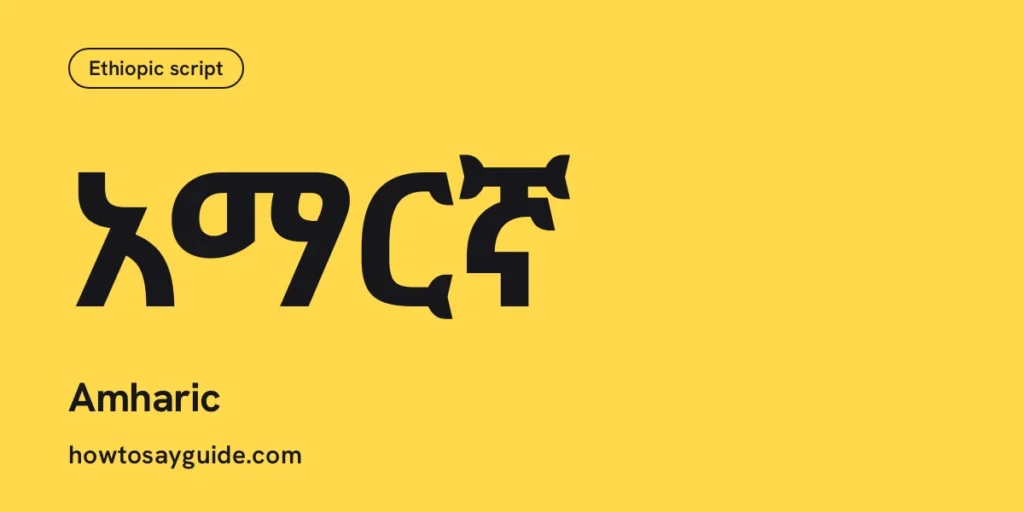
Amharic is the main working language of Ethiopia's federal government. About 22 million people speak it as a first language, and many more use it as a second language, which makes it the most widely spoken language in Ethiopia. It is a Semitic language, related to Tigrinya, Arabic and Hebrew.
Amharic is written in the Ge'ez script, called fidel, in which each symbol stands for a whole syllable, a consonant together with a vowel. There are more than 200 of these symbols. Latin spellings of Amharic are not standardized, so the same word can appear in several forms. For a polite "you" say ersewo, and the common greeting is selam.
| Family | Afroasiatic, Semitic |
|---|---|
| Native speakers | about 21.9 million (2019) |
| Official in | Ethiopia (federal working language) |
| Script | Ge'ez (Ethiopic) script |
| Codes | am (ISO 639-1), amh (ISO 639-3) |
Speaker number: Ethnologue (2019), via Wikidata. Retrieved 26 September 2026.
In Amharic, ‘welcome’ is expressed as እንኳን ደህና መጣህ m እንኳን ደህና መጣሽ f እንኳን ደህና መጡ. This phrase is a greeting given upon someone’s arrival.
In Amharic, “good evening” is expressed as እንደምን አመሸህ? This phrase is used as a greeting during the evening hours.
The English phrase “welcome back” is translated into Amharic as እንኳን ደህና መጣህ.
The English word ‘no’ is expressed in Amharic as አይደለም. አይደለም is used to show disagreement or negation.
The English word “monkey” is translated into Amharic as ዝንጀሮ. ዝንጀሮ is a noun used to refer to a primate.
The Amharic word for cat is ድመት. ድመት is used to refer to the domestic species of cat.
The Amharic word for yellow is ቢጫ. ቢጫ is used as an adjective to describe something that has yellow as its color.
The English phrase “no problem” can be said in Amharic as ችግር የለም.
The English word “girl” is translated into Amharic as ሴት ልጅ or ልጃገረድ. Both forms refer to a young female person.
In Amharic, goodbye is said as ደህና ሁን. The phrase is used as a farewell.